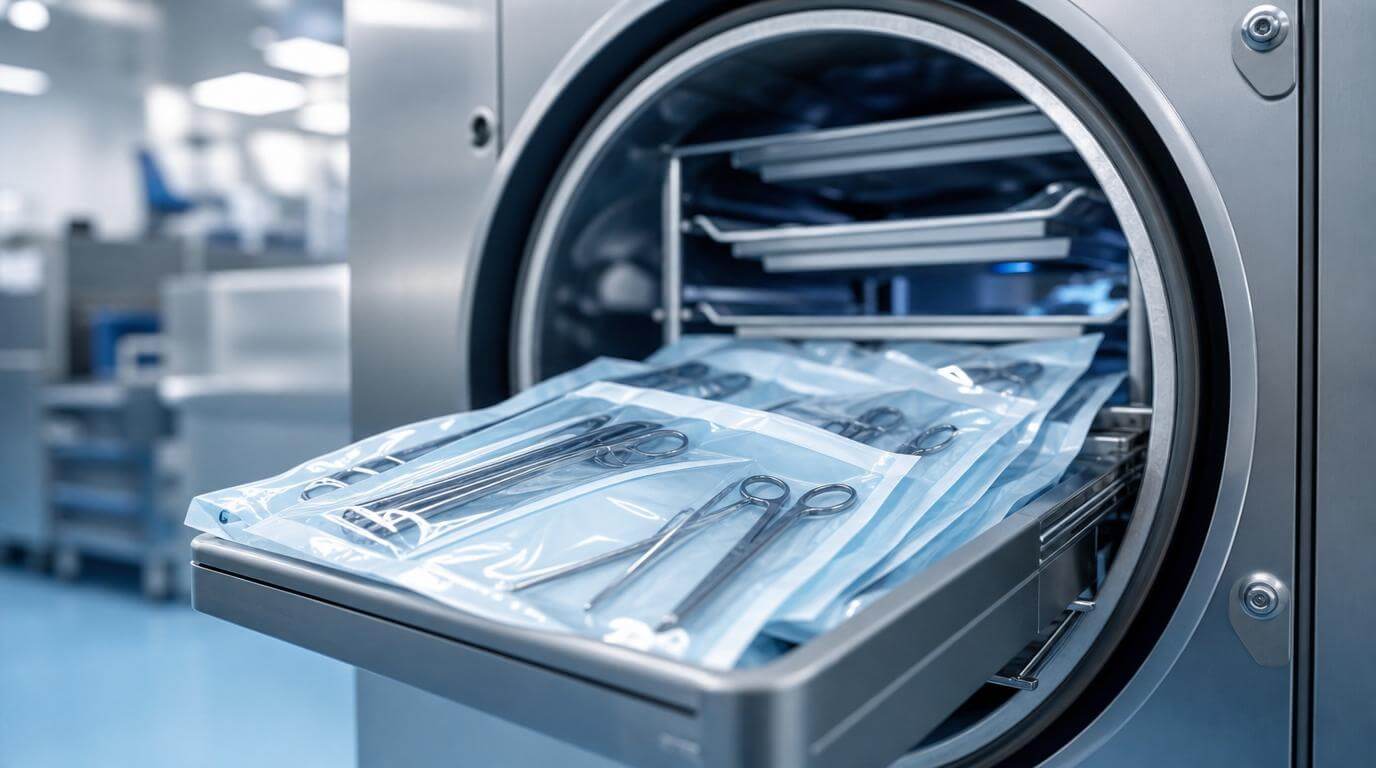
In the third edition of ISO 10993-7, the core of the standard underwent a substantive revision – the most stringent revision to EO (ethylene oxide) sterilization requirements in 18 years. Numerous topics were reinforced and strengthened. Methods for determining appropriate, relevant risk-based limits for EO residuals and ethylene chlorohydrin (ECH) residuals have been introduced. An enhancement of the protection for vulnerable patient populations has been observed. And clarity, detailed examples and explanations for conducting the appropriate toxicological approach have been provided.
Here’s what devices manufacturers and EO sterilization suppliers need to know.
| NEW: 3rd Edition ISO 10993-7:2026 formally supersedes ISO 10993-7:2008 + Corrigendum (2009) + Amendment 1 (2019). The 2008 version, even with its amendment, suffered from weaknesses highlighted by the increased amount of data now associated with ethylene oxide toxicological hazards. Previous allowable limits had been elaborated based on the available data on that date. But twenty years later, an in-depth revision was more than needed. |
The 2026 edition consolidates and extends the requirements into a single, coherent technical framework, designed to protect all patient populations, with a particular focus on the vulnerable ones.
Why Was This Revision Both Necessary… and Overdue?
In 2026, EO sterilization still represents a large part of sterilization methods of medical devices, notably among heat and moisture-sensitive devices. The ISO 10993-7:2008 version presented generic allowable limits protective for 70-kg adults, applied uniformly across both adult and pediatric populations. However, nearly two decades of gathered toxicological data on EO toxicity after the initial standard release confirmed the dangerousness of this small molecule; EO has mutagenic, reprotoxic and carcinogenic potential and is classified as Carc. 1B, Muta. 1B and Repr. 1B per CLP regulation. This raised urgent needs for an update of the ISO 10993-7 standard.
The first step was the 2019 amendment which introduced pathways for calculating relevant allowable limits for neonates and infants taking body weight into account. That was an important beginning. But a deeper technical, comprehensive revision integrating the improvement brought by the amendment was necessary – and now available.
Some patients receiving EO-sterilized devices are among the most biologically vulnerable individuals in any healthcare setting. It became urgent to protect them. The whole framework has been improved, aligned with the more recently gathered knowledge. The expanded number of informative annexes in the new edition reflects a deliberate commitment by the writing group to detail the reasoning behind these strongest requirements.
| Key Point The 2026 revision was driven by the aim of strengthening the protection of the health of the patient, as EO toxicity continues to be demonstrated. The accumulation of toxicological data on EO made the older by-default allowable limits inappropriate for all patient populations. The new standard provides more clarity in the toxicological risk-based approach and presents step-by-step methods to guide users in determining appropriate protective limits according to their targeted populations. |
The Most Important Updates in ISO 10993-7:2026
The Protections for Vulnerable Populations has been Strengthened
Neonates, infants, pregnant women, and immunocompromised patients may be exposed to a larger number of EO sterilized devices than healthy “regular” adult patients weighing a uniform 70 kg. There are no more windows for basic, by-default limits. Cumulative exposures throughout lifetime now have to be part of the demonstration, including required adjustments for young ages up to adulthood.
A Risk-Based Approach is now Preferred to Sustain the Selected Allowable Limits
The requirements generated by the 2026 version now permit the manufacturers to justify their calculations for the selected allowable limits, also taking into account the extraction conditions. Relying solely on the previously presented tabulated values for EO (or ECH) is no longer sufficient: demonstrations are expected to be documented through a comprehensive toxicological risk assessment. The links between limits and intended use, clinical context, patient population, and duration of use need to be explicitly highlighted.
Clearer Criteria for Releasing EO-Sterilized Devices
Sterilization residuals degassing is affected by numerous factors that are now explicitly presented. An uncertainty factor approach is still used to derive exposure duration-specific values: as in the previous version of the standard, the calculations of the allowable limits continue to be differentiated across three-time horizons (namely less than 24 hours, less than 30 days, and longer term). As applicable, before being released, EO residuals on a device still have to fulfill the requirements related to each of those timeframes. The 2026 revision provides clearer and more structured expectations for batch release, detailing the use of residual dissipation data, aeration profiles, and defined criteria for release at minimum aeration times.
Practical Implications
If your device is indicated for use regardless of patient’s age (in neonatal ICUs, for treating only pediatric patients, during pregnancy or for critically ill or immunocompromised patients) your existing EO residual limits based on the 2008 edition may no longer be protective per new standard requirements – or at least, if applicable, its continuous relevance will have to be demonstrated. A gap assessment against the 2026 requirements, performed or reviewed by a qualified toxicologist should be initiated before your next device release cycle or regulatory submission.
It may also be important to consider that the initially calculated quarantine times for degassing may not be appropriate anymore. Your whole sterilization validations, device storage, and distribution lines may be impacted. Availability of quarantine rooms at your EO sterilization supplier could be challenged and your entire sterilization parameters may need to be revised.
What Manufacturers Need to Do Now
Identify which of your EO-sterilized devices are used in other populations than “adults”
Neonates, pediatric patients, immunocompromised patients, etc. Population-specific limits determination are expected. Review your intended use statements and confirm your patient population descriptions across all your devices portfolios. NAMSA’s Regulatory Team and NAMSA EO residuals testing team can help you in adjusting your market data to these new regulatory expectations.
Conduct a gap assessment against the 2026 requirements
Compare your existing EO residual documentation against the new risk-based framework. Pay particular attention to how limits were originally justified and exact residuals quantities obtained. The toxicological justifications should reflect the current guidance on EO toxicity for all patient populations.
Engage a qualified toxicologist to determine the suitability of your allowable limits
The 2026 standard requires scientifically and toxicologically justified limits, adjusted per intended users, including adults. Most of the technical documentation related to sterilization validation may require strengthening. NAMSA’s toxicological risk assessment services provide support in determining these limits across all device classes.
Update your biological evaluation and risk management documentation
Changes in ISO 10993-7:2026 have downstream implications for your ISO 10993-1 biological evaluation and ISO 14971 risk management file. These should be updated in a coordinated review, not addressed in isolation.
Frequently Asked Questions (FAQs)
Does ISO 10993-7:2026 immediately replace the 2008 edition for regulatory submissions?
ISO 10993-7:2026 formally supersedes ISO 10993-7:2008 and its amendment as of its publication in April 2026. For regulatory submissions, however, transition timelines depend on the recognizing authority. Manufacturers should consult with their relevant national or regional regulator. Agencies such as the FDA, EU MDCG, and others typically publish transition guidance following major standard revisions. In the meantime, beginning gap assessments and planning documentation updates now is strongly advisable, particularly for devices intended for vulnerable patient populations.
What does the “risk-based approach” to limit determination mean in practice?
Under the 2026 edition, manufacturers may establish allowable limits through a documented risk assessment rather than relying on fixed tabulated defaults – as long as those limits are scientifically and toxicologically justified. In practice, this means that the available EO toxicity data would benefit from a review by a qualified toxicologist, ensuring the patient population and duration of exposure have been appropriately considered before the derivation of a justified limit that accounts for body mass, cumulative exposure across the intended use duration, and population-specific sensitivities. Although this approach is more demanding than consulting predefined tables, it results in allowable limits that will be specific to a device and more robust under regulatory scrutiny.
Which devices are most affected by the 2026 changes?
Devices that are EO-sterilized and intended for any populations other than adults are directly affected. These other populations (pediatric patients, patients with impaired metabolisms, etc.) now require the determination of dedicated limits.
Even though new validations of EO or ECH residuals may not be required for an adult population, the relevance of the former by-default values now must be supported by appropriate justification.
Manufacturers of any devices intended for use in neonatal units, for pediatric patients, in NICUs, or for any critical care applications should prioritize demonstrating conformity with appropriate residuals limits.
These three standards were revised in a closely adjacent timeframe. All of them have a strong emphasis on risk-based, toxicologically justified assessments over fixed testing matrices. The ISO 10993-1:2025 reinforces the expectation that a biological evaluation should fit each specificity of the evaluated device: intended uses, patient and user’s duration of exposures, potential cumulative contact, type of body contact, or life cycle of the device. Justification of every decision should be evident. The ISO 10993-17:2023 requests that the most accurate toxicological knowledge is used as a basis for applying the methods for derivation of tolerable intake or threshold of toxicological concern and adjusted to the exposure dose, for supporting the safety of the extractables and leachables compounds on a device.
ISO 10993-7:2026 shares this risk-based approach with these two standards. Manufacturers updating their biological evaluation documentation in response to any of these should analyze the potential implications for the other two, simultaneously, to avoid creating internal inconsistencies across their regulatory files. NAMSA’s extractables and leachables testing and NAMSA’s toxicological risk assessment services can help you coordinating your documentation updates across the full ISO 10993 series.
Why did the writing group not align ISO 10993-7:2026 with ISO 10997-17:2023?
This is a very good point. The ISO 10993-17:2023 standard presents the methods for performing a toxicological risk assessment of medical device constituents (whatever the constituents). The particularity of ISO 10993-7 is that it is dedicated to three specific compounds of particular toxicity – EO, ECH and EG – in a context of EO sterilization validations and of routine release of EO sterilized devices.
The revisions of these two standards were conducted in parallel, with experts involved in both working groups. The 2026 edition adopts a slightly different approach compared to ISO 10993-17. It focusses on the determination of the maximum amounts of EO, ECH (and EG) allowed to remain in a medical device after a validated sterilization cycle, while still meeting the corresponding ISO 10993-17 requirements. Consistency between these two standards was kept in mind and optimized, but perfect alignment was not an aim for the ISO 10993-7 revision (e.g. allowable limit is a terminology which has been retained in the ISO 10993-7 standard but removed in the ISO 10993-17).
The ISO writing team made a deliberate decision to maintain a separate, purpose-built toxicological interpretation centered on EO sterilization residuals – knowing that the standard is used by manufacturers or sterilization experts who may not be toxicologists but still need clear guidance to ensure the safety of the devices they proposed to the patients.
Is EO sterilization still an appropriate method for medical devices sterilization?
The protection of patient health has been the cornerstone of the ISO 10993-7:2008 update. Because more and more grounded justifications will be required to demonstrate compliance with tailored allowable limits per devices and per populations, it can be reasonably anticipated that EO sterilization will become increasingly burdensome for manufacturers. The selection and the qualification of alternative sterilization methods – provided they remain compatible with the devices under evaluation – may eventually appear to be the simplest and safest solutions.